
How to Check Criminal History in Ellijay
Start with the event and the office that made the record. Ellijay Police holds its reports, the city court holds citation files, and Gilmer County holds booking and felony-court records. Georgia Felon Search is a narrower statewide option for reported felony convictions, but it does not replace those local files.
- Confirm the event occurred inside Ellijay city limits, then call Ellijay Police at 706-635-7430.
- For a written report request, contact City Clerk Lori Pierce at cityclerk@ellijay.com or 706-635-4711 ext. 3.
- Use the Municipal Court clerk or citation portal when the ticket names the Municipal Court of the City of Ellijay.
- For custody, call Gilmer Adult Detention Center at 706-635-4625; for a felony file, contact the Superior Court clerk.
- Use Georgia Felon Search only for reported Georgia felony convictions and recognize its omissions.
Ellijay Address or Police Jurisdiction?
An Ellijay mailing address can sit in East Ellijay or unincorporated Gilmer County. The incident location, not the postal label, determines which police agency created the report. Unified dispatch at 706-635-8911 operates through the sheriff around the clock and can route a caller to the proper department.
Ellijay Police cannot be assumed to hold a sheriff report or East Ellijay file. When the agency is uncertain, provide the location and time to dispatch, identify the responding unit, and then send the request to that source.
The Ellijay Police Department
Ellijay Police Department operates at 197 N Main Street, Ellijay, GA 30540. The office phone is 706-635-7430 and fax is 706-635-7457. Chief Edward D. Lacey III may be reached at the main number, extension 101, or edlacey@ellijay.com. Officers respond at all hours, no appointment is required to make a report, and some reports can be taken by phone.
For an already-occurred nonurgent incident, call unified dispatch at 706-635-8911 or the police office. Records are normally available three days after filing, with records hours Monday through Friday, 9 a.m. to 5 p.m. Detective follow-up is usually 48 to 72 hours where needed.
The official Ellijay Police page presents the department's city records channel.
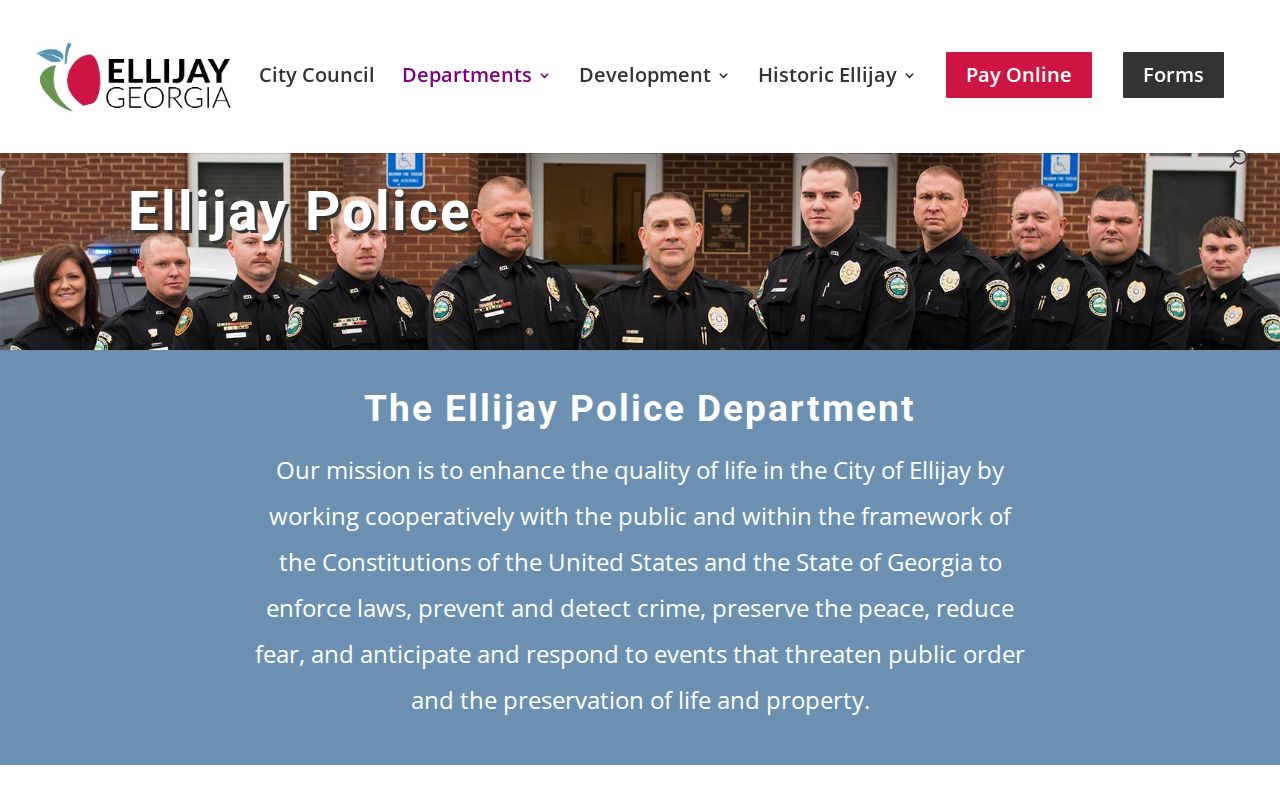
The city page confirms that the police report remains an Ellijay source even when custody later shifts to the county jail.
Ellijay Police Open-Records Requests
City Clerk Lori Pierce is the police open-records officer. Requests may be emailed to cityclerk@ellijay.com, faxed to 706-635-4712, mailed, or delivered to 197 N Main Street. Her phone is 706-635-4711 ext. 3. With no fixed city web form, a focused written request is the practical method.
Give the date, location, report number if known, and exact item sought. Ellijay charges 10 cents per page plus lawful search, retrieval, redaction, and direct costs. The first 15 minutes are free.
The city lists these channels on its official open-records page.
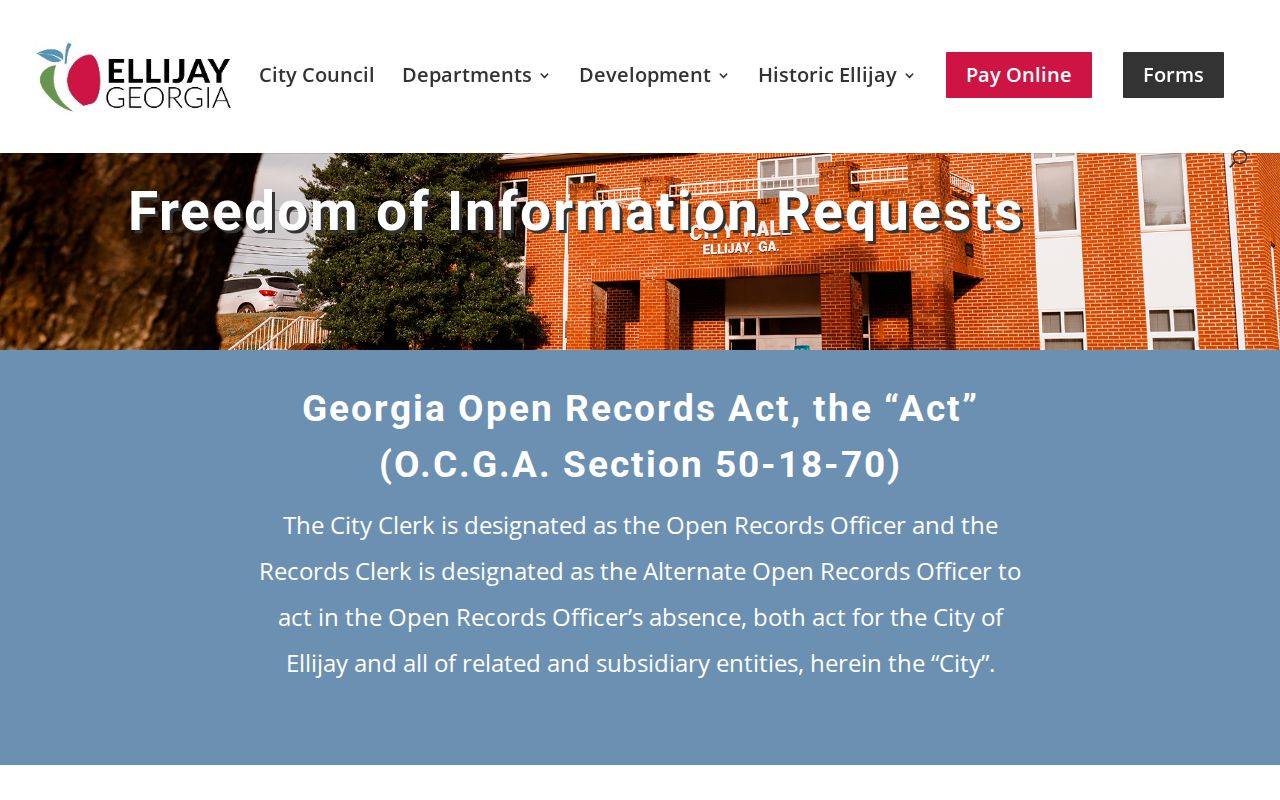
This city route applies to Ellijay Police material; sheriff and Superior Court records have separate custodians.
Arrests and Bookings in Ellijay
Ellijay has no city jail. When Ellijay Police makes a custodial arrest, the booking record is created at Gilmer County Adult Detention Center. Call 706-635-4625 for present custody information. The police report remains with Ellijay, so a complete view can require both the city report and county booking record.
A booking entry reflects intake, initial charges, bond, custody, and release. It does not establish guilt. Charges can change after prosecutor review, and a current-inmate display can stop showing a person after release or transfer. Use the court file for the later outcome.
Read the Ellijay Citation First
The bottom of the citation identifies the court. Use Ellijay's portal only when the ticket identifies Ellijay Police or Georgia State Patrol and names the Municipal Court of the City of Ellijay. A different court name points to a different clerk.
The portal accepts a Citation Number from the top right or a Driver's License Number. Its green Find button runs the query. Ellijay also publishes 844-324-8816 for phone payment. Since payment may carry a plea consequence, contact the clerk when options are unclear.
Ellijay Municipal Court Records
Municipal Court Clerk Angie Leyva handles Ellijay citations, payments, and date rescheduling. Contact 706-635-4711 ext. 1, courtclerk@ellijay.com, or fax 706-635-4712. Plea choices include guilty and not guilty. A not-guilty trial may occur on the set date or be reset.
| Court Name | Municipal Court of the City of Ellijay |
|---|---|
| Case Types Heard | Qualifying city citations, traffic matters, and ordinance cases |
| Case Lookup Channel | Citation portal by citation or driver's-license number, or the clerk |
| What the Docket Shows | Citation, schedule, plea, payment, reset, and disposition information |
| Copies & Fees | Ask the clerk for availability, format, and a current quote |
The Municipal Court clerk page provides official contacts and calendar details.
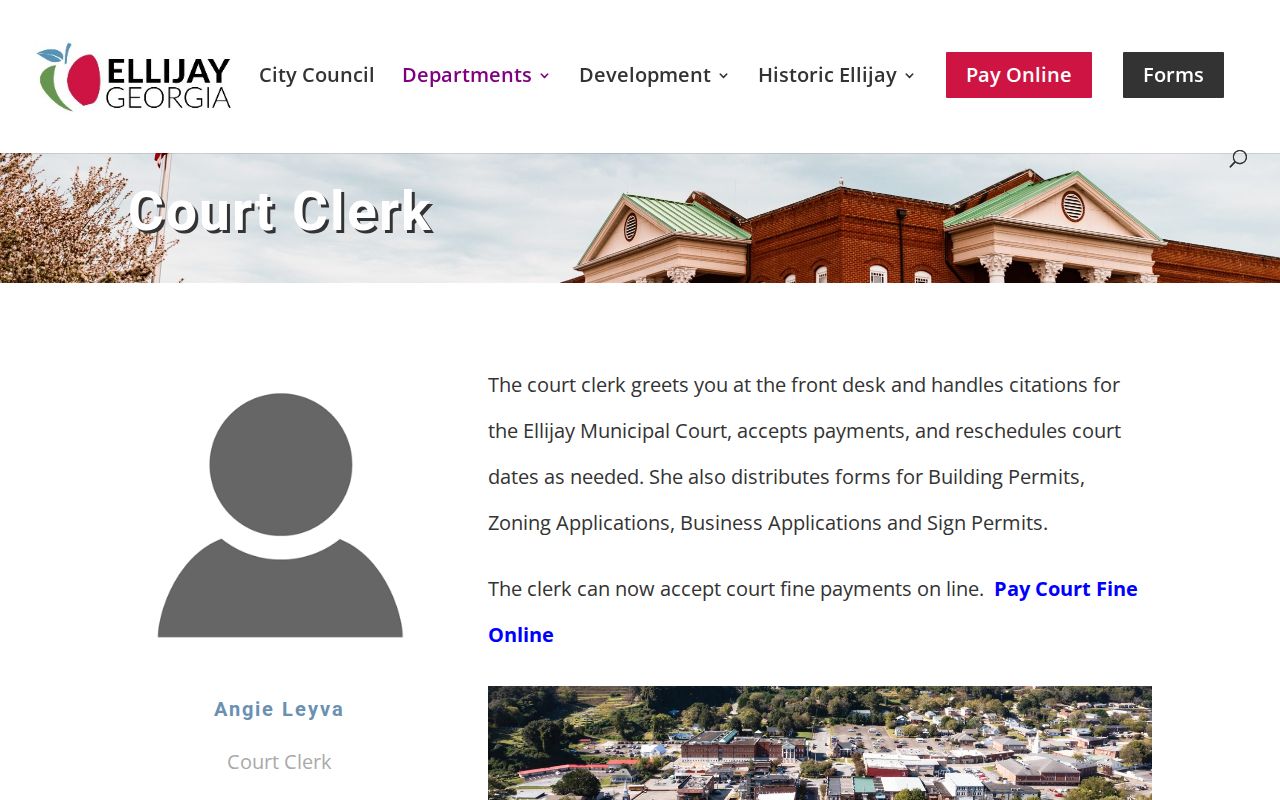
The court page is the reliable source when the ticket portal does not explain a reset, plea, or final result.
Where Ellijay Records End Up
Minor city matters may remain in Municipal Court. A felony-level case moves through Gilmer Superior Court, whose clerk maintains the accusation or indictment, docket, plea, judgment, and sentence. A qualifying fingerprinted arrest and reported disposition also move into the state repository.
Record flow: Ellijay Police Department › Gilmer County Courts › Georgia Bureau of Investigation, Georgia Crime Information Center
Timing changes the best source. Ellijay Police is strongest for the incident narrative, the detention center for present custody, and the court clerk for adjudication. The broader Gilmer County criminal history overview explains county and state channels.
Ellijay Records Around the Historic Square
Ellijay became the county seat in 1834 where the Ellijay and Cartecay Rivers form the Coosawattee. The early public-square plan used lot proceeds to help construct a jail and courthouse. City and county offices remain close, but proximity does not combine their record custody.
The official history of Ellijay connects the square with those early justice buildings.
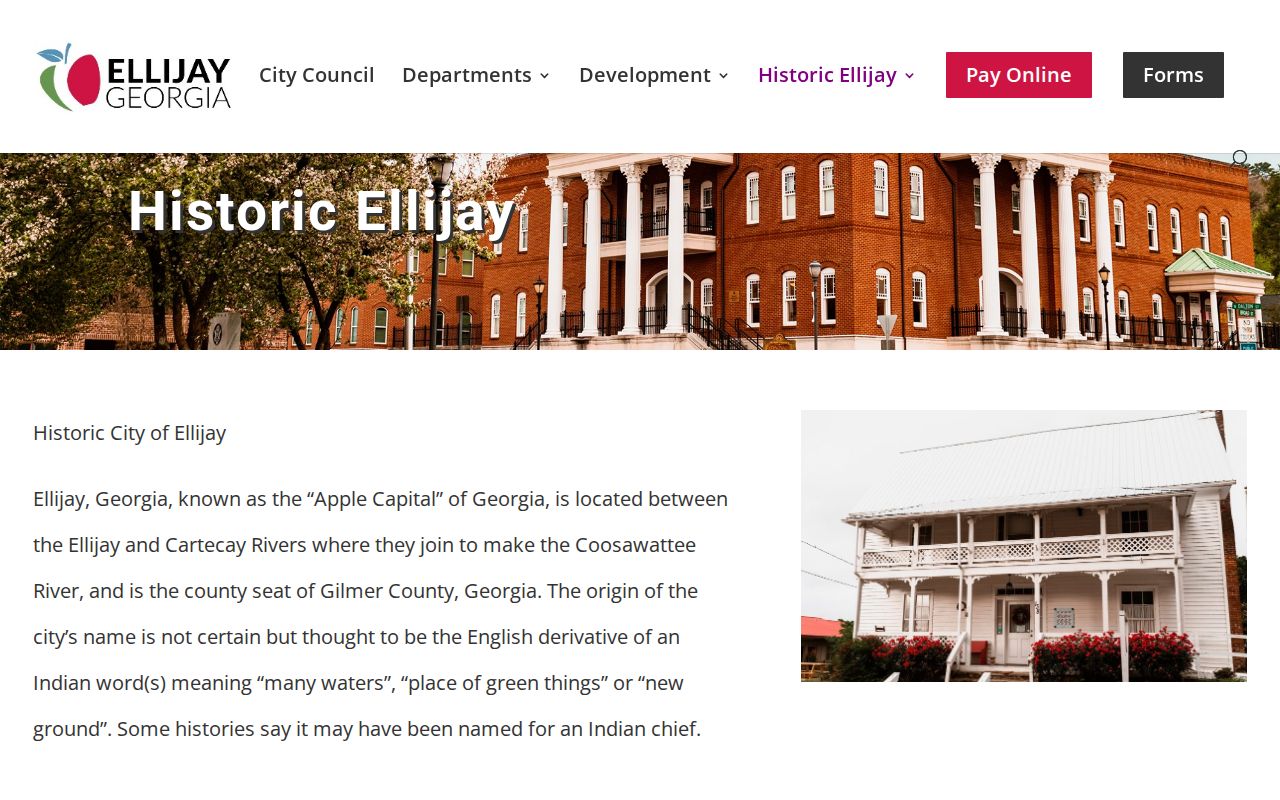
Today, Ellijay keeps city police and municipal files while the county clerk keeps felony court records.
Pending Ellijay Reports and Redactions
Ellijay may withhold material tied to a pending investigation or prosecution and redact juvenile, sexual-assault, and protected identifying information. A partial release does not mean the event lacks a record. Ask for segregable portions and the legal basis for withholding.
Separate an incident report from detective material, dispatch data, booking information, and the court docket. They are distinct records. A narrow request with dates, location, and report number helps identify the file and control cost.
Ellijay City Files Versus County Files
Ellijay Police records officer actions. Gilmer detention records intake and custody. Municipal Court records qualifying citations, while Superior Court records felony prosecution and disposition. GCIC summarizes reported statewide cycles but does not reproduce every local narrative or filing.
When the initial police charge differs from the court result, use the filed accusation or indictment and judgment for the adjudicated outcome. If a statewide history lacks that disposition, obtain the court document and follow GBI correction instructions.
Public Access Rules for Ellijay Records
Georgia law begins with public access but recognizes active-case, juvenile, victim, personal-identifier, sealed, and restricted-record limits. Ellijay may redact protected material. When production takes longer, the Georgia Open Records Act generally requires a response within three business days explaining timing and cost.
Public access also depends on asking the correct custodian. The city clerk answers for Ellijay Police open records, the Municipal Court clerk answers for city citation files, and the Gilmer Superior Court clerk answers for felony case records. Sending one broad request to every office can increase delay because each office must determine whether it holds any responsive file.
For police material, describe the incident rather than asking for a person's complete history. Give a date or short range, location, responding agency, and report number when known. If video, dispatch audio, or a large investigative file is involved, ask for a cost estimate and state whether inspection or electronic delivery will meet the need.
For court material, identify the citation or case number and request the exact docket entry, plea, judgment, or disposition. A plain copy and a certified copy serve different purposes and can carry different costs. Because Ellijay did not publish a verified court-copy fee schedule in the research, obtain a current quote instead of assuming a price.
A record can change as the matter moves. Initial charges in an Ellijay report may be amended, declined, or dismissed; a booking record may show only the intake label; and a repository history may wait for a final report from the court. Compare dates and charge-level outcomes across the source file, detention entry, and court docket.
If a final Ellijay disposition is missing from a GCIC history, obtain the matching court document first. GBI directs challenges back through the agency that originated or reported the information. Supplying the case number, arrest date, and final order gives that source a concrete record to compare and correct.
Key Statutes:
Georgia Open Records Act, O.C.G.A. §§ 50-18-70 and 50-18-71 - Covers access, response timing, and lawful search charges.
O.C.G.A. § 35-3-34(d.2) - Authorizes access to specified felony-conviction information with required identifiers.
O.C.G.A. § 35-3-37 - Restricts qualifying arrest-cycle information without deleting it.